





www.sulzergroup.com | 866.767.9869 | info@sulzergroup.com
As we continue sharing timely insights and resources, we recognize the ongoing devastating toll that recent disasters have taken across the United States. From wildfires and floods to extreme weather events, communities nationwide are facing unprecedented challenges. Our hearts are always with the survivors, the families of those affected, and the many first responders and emergency teams working around the clock. God bless them all.
At the Sulzer Group, we are actively engaged in disaster recovery efforts across the country—standing alongside government agencies, school and healthcare systems, secular and non-secular, and private non-profit organizations. With catastrophic and seemingly never-ending storms all across the nation, this edition is designed to offer practical tools, expert guidance on funding resources, and ongoing support for those working to protect lives and maintain critical infrastructure.
Breaking News
FEMA Fiscal Year 2025 Nonprofit Security Grant Program Notice of Funding Opportunity
On July 31, the Federal Emergency Management Agency (FEMA), a component of the Department of Homeland Security (DHS), is announcing the release of the Fiscal Year (FY) 2025 Notice of Funding Opportunity (NOFO) for the Nonprofit Security Grant Program (NSGP). The FY 2025 NSGP represents $274.5 million in federal assistance.
For more details on this opportunity, please refer to Information Bulletin #532. The NOFO is available online at http://www.fema.gov/grants and at http://www.grants.gov.Bipartisan Bill to Dramatically Reform FEMA

Bipartisan Bill to Dramatically Reform FEMA
On July 25, Transportation and Infrastructure Committee leaders introduced the Fixing Emergency Management for Americans (FEMA) Act of 2025 (H.R. 4669) in the U.S. House that would drastically overhaul FEMA. Introduced by Committee Chairman Sam Graves (R-MO), Rick Larsen (D-WA), Daniel Webster (R-FL), and Greg Stanton (D-AZ).
Highlights include:
- FEMA becomes cabinet-level agency directly accountable to the President.
- Rewards for state and local preparedness efforts, incentives for mitigation and rainy day funds.
- Shift towards project-based grants to streamline disaster recovery efforts.
Severe Weather Preparedness Tips from FEMA
Severe weather can happen anytime, in any part of the country. Severe weather can include hazardous conditions produced by thunderstorms, including damaging winds, tornadoes, large hail, flooding and flash flooding.
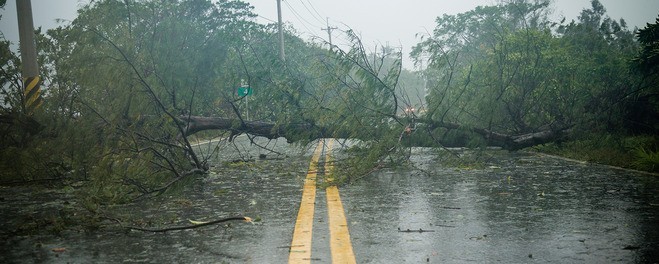
Prepare for Thunderstorms & Lightning
Know Your Risk: Know your area’s risk for thunderstorms. In most places they can occur year-round and at any hour. Sign up for your community’s warning system. The Emergency Alert System (EAS) and National Oceanic and Atmospheric Administration (NOAA) Weather Radio also provide emergency alerts.
Strengthen Your Home: Cut down or trim trees that may be in danger of falling on your home. Consider buying surge protectors, lightning rods or a lightning protection system to protect your home, appliances and electronic devices.
Make an Emergency Plan: Create an emergency plan so that you and your family know what to do, where to go and what you will need to protect yourselves from the effects of a thunderstorm. Identify sturdy buildings close to where you live, work, study and play.
Stay Safe During Thunderstorms & Lightning
If you are under a thunderstorm warning:
- When thunder roars, go indoors! Move from outdoors into a building or car with a roof.
- Pay attention to alerts and warnings.
- Avoid using electronic devices connected to an electrical outlet.
- Avoid running water.
- Turn Around. Don’t Drown! Do not drive through flooded roadways. Just six inches of fast-moving water can knock you down, and one foot of moving water can sweep your vehicle away.
Stay Safe After Thunderstorms & Lightning
- Pay attention to authorities and weather forecasts for information on whether it is safe to go outside and instructions regarding potential flash flooding.
- Watch for fallen power lines and trees. Report them immediately.
American Red Cross THUNDERSTORM Safety Checklist
Prepare for a Flood
Know Your Risk: Visit FEMA’s Flood Map Service Center to know types of flood risk in your area. However, remember that flooding doesn’t follow lines on a map. Where it can rain it can flood. Sign up for your community’s warning system. The Emergency Alert System (EAS) and National Oceanic and Atmospheric Administration (NOAA) Weather Radio also provide emergency alerts. The National Risk Index is an easy-to-use, interactive tool that shows which communities are most at risk to natural hazards like flooding.
Purchase Flood Insurance: Purchase or renew a flood insurance policy. Homeowner’s insurance policies do not cover flooding. It typically takes up to 30 days for a policy to go into effect so the time to buy is well before a disaster. Get flood coverage under the National Flood Insurance Program (NFIP).
Preparing for a Flood: Make a plan for your household, including your pets, so that you and your family know what to do, where to go, and what you will need to protect yourselves from flooding. Learn and practice evacuation routes, shelter plans, and flash flood response. Gather supplies, including non-perishable foods, cleaning supplies, and water for several days, in case you must leave immediately or if services are cut off in your area.
In Case of Emergency: Keep important documents in a waterproof container. Create password-protected digital copies. Protect your property. Move valuables to higher levels. Declutter drains and gutters. Install check valves. Consider a sump pump with a battery.
Staying Safe During a Flood
- Evacuate immediately, if told to evacuate. Never drive around barricades. Local responders use them to safely direct traffic out of flooded areas.
- Contact your healthcare provider If you are sick and need medical attention. Wait for further care instructions and shelter in place, if possible. If you are experiencing a medical emergency, call 9-1-1.
- Listen to EAS, NOAA Weather Radio or local alerting systems for current emergency information and instructions regarding flooding.
- Do not walk, swim or drive through flood waters. Turn Around. Don’t Drown!
- Stay off bridges over fast-moving water. Fast-moving water can wash bridges away without warning.
- Stay inside your car if it is trapped in rapidly moving water. Get on the roof if water is rising inside the car.
- Get to the highest level if trapped in a building. Only get on the roof if necessary and once there signal for help. Do not climb into a closed attic to avoid getting trapped by rising floodwater.
Staying Safe After a Flood
- Pay attention to authorities for information and instructions. Return home only when authorities say it is safe.
- Avoid driving except in emergencies.
- Wear heavy work gloves, protective clothing and boots during clean up and use appropriate face coverings or masks if cleaning mold or other debris.
- People with asthma and other lung conditions and/or immune suppression should not enter buildings with indoor water leaks or mold growth that can be seen or smelled. Children should not take part in disaster cleanup work.
- Be aware that snakes and other animals may be in your house.
- Be aware of the risk of electrocution. Do not touch electrical equipment if it is wet or if you are standing in water. Turn off the electricity to prevent electric shock if it is safe to do so.
- Avoid wading in floodwater, which can be contaminated and contain dangerous debris. Underground or downed power lines can also electrically charge the water.
- Use a generator or other gasoline-powered machinery ONLY outdoors and away from windows.
American Red Cross FLOOD Safety Checklist
Prepare for a Tornado
Know Your Risk
- Know your area’s tornado risk. The Midwest and the Southeast have a greater risk for tornadoes.
- Know the signs of a tornado, including a rotating, funnel-shaped cloud, an approaching cloud of debris, or a loud roar like a freight train.
- Sign up for your community’s warning system. The Emergency Alert System (EAS) and NOAA Weather Radio also provide emergency alerts. If your community has sirens, then become familiar with the warning tone.
- Pay attention to weather reports. Meteorologists can predict when conditions might be right for a tornado.
- Identify and practice going to a safe shelter such as a safe room built using FEMA criteria or a storm shelter built to ICC 500 standards. The next best protection is a small, interior, windowless room or basement on the lowest level of a sturdy building.
- Plan for your pet. They are an important member of your family, so they need to be included in your family’s emergency plan.
- Prepare for long-term stay at home or sheltering in place by gathering emergency supplies, cleaning supplies, non-perishable foods, water, medical supplies and medication.
Staying Safe During a Tornado
- Immediately go to a safe location that you have identified.
- Pay attention to EAS, NOAA Weather Radio, or local alerting systems for current emergency information and instructions.
- Protect yourself by covering your head or neck with your arms and putting materials such as furniture and blankets around or on top of you.
- In a car or truck: There is no safe option when caught in a tornado in a car, just slightly less-dangerous ones. If the tornado is visible, far away, and the traffic is light, you may be able to drive out of its path by moving at right angles to the tornado. If you are caught by extreme winds or flying debris, park the car as quickly and safely as possible — out of the traffic lanes. Stay in the car with the seat belt on. Put your head down below the windows; cover your head with your hands and a blanket, coat, or other cushion if possible. If you can safely get noticeably lower than the level of the roadway, leave your car and lie in that area, covering your head with your hands. Avoid seeking shelter under bridges, which can create deadly traffic hazards while offering little protection against flying debris.
Staying Safe After a Tornado
- Save your phone calls for emergencies and use text messaging or social media to communicate with family and friends.
- Pay attention to EAS, NOAA Weather Radio, and local authorities for updated information.
- Stay clear of fallen power lines or broken utility lines.
- Contact your healthcare provider if you are sick and need medical attention. Wait for further care instructions and continue to shelter in place.
- Wear appropriate gear during clean-up such as thick-soled shoes, long pants, and work gloves, use appropriate face coverings or masks if cleaning mold or other debris.
American Red Cross TORNADO Safety Checklist For more tips on how to prepare, visit Ready.gov.
2025 Hurricane Season- Updates From the Florida Division of Emergency Management
As we are amidst this (thankfully, slow) hurricane season, FDEM’s Recovery Bureau will be sending more frequent updates to keep residents informed about event specific information, grant & application deadlines, required application documentation, and other emergency guidance that may affect your project(s).
To be sure you receive these time-sensitive messages, please:
- Add the following trusted email addresses to your safe-sender list or address book: noreply@em.myflorida.com fdem-recovery-questions@em.myflorida.com recoverydebris@em.myflorida.com rpa.help@em.myflorida.com floridapa@em.myflorida.com f-roc@em.myflorida.com fldrgsportalsupport@managedgrants.com
- Some of the messages may contain links to trusted websites which include: https://floridapa.org/ https://grantee.fema.gov/ https://www.floridadisaster.org/ https://fldrgs.managedgrants.com/
- Verify your contact information in https://floridapa.org/. Up-to-date phone numbers and email addresses help us reach you quickly when conditions change.
If you have any questions or need assistance updating your information, reply to this message (rpa.help@em.myflorida.com) or visit https://www.floridadisaster.org/
So Why No Hurricanes?
So if ocean temperatures across the Atlantic are plenty toasty for hurricanes to form… what’s preventing them from forming?
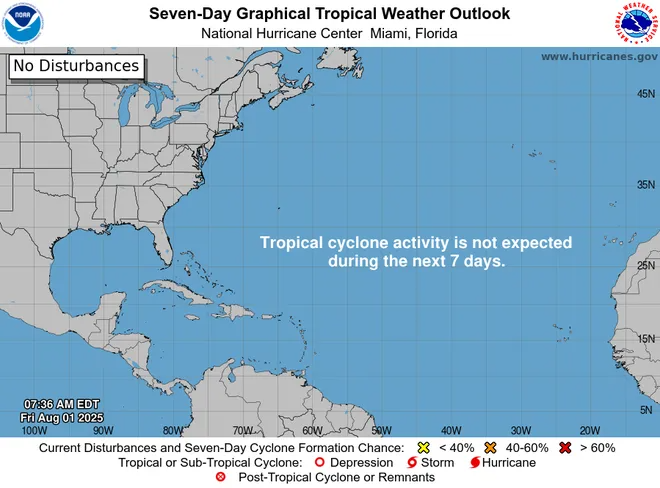
“One of the biggest disruptors of the Atlantic hurricane season so far has been unfavorable upper-level winds,” Klotzbach told USA TODAY. “Atlantic vertical wind shear is generally westerly. We’ve had a lot of upper-level westerly winds over the past few weeks, increasing vertical wind shear across the Main Development Region.”
This is the summer of flooding across the US, and scientists know why
Once synonymous with leisure and reprieve, summer has increasingly become a season marked by anxiety and disruption. Fossil fuel pollution — alongside other compounding factors — has transformed these months into a time of mounting peril, punctuated by relentless heat waves, rampant wildfires and catastrophic flooding.
This summer, in particular, has been defined by a tragic surge in deadly flash floods across the United States, underscoring the escalating volatility of our warming world.
It’s no accident this is the summer of flooding, climate scientists say, with 100-year to 1,000-year deluges happening nearly simultaneously in multiple states on multiple days.
Large parts of the US have seen an unusually humid summer with record amounts of moisture in the air. When cold fronts and other weather systems come along, that moisture can get wrung out, squeezed like a water-laden sponge, yielding heavy and often highly localized downpours.
For much of the summer, the atmospheric conditions over the US have funneled humid air north from the unusually warm Gulf and western Atlantic, including the Gulf Stream, UCLA climate researcher Daniel Swain told CNN. This has yielded unusually high levels of moisture at all levels of the atmosphere across the US east of the Rockies, Swain said.
It has led to record levels of what meteorologists call precipitable water, which is the amount of rain that would result from instantaneously extracting all the water in the air.
Sadly, this pattern has led to one flash flood after another.
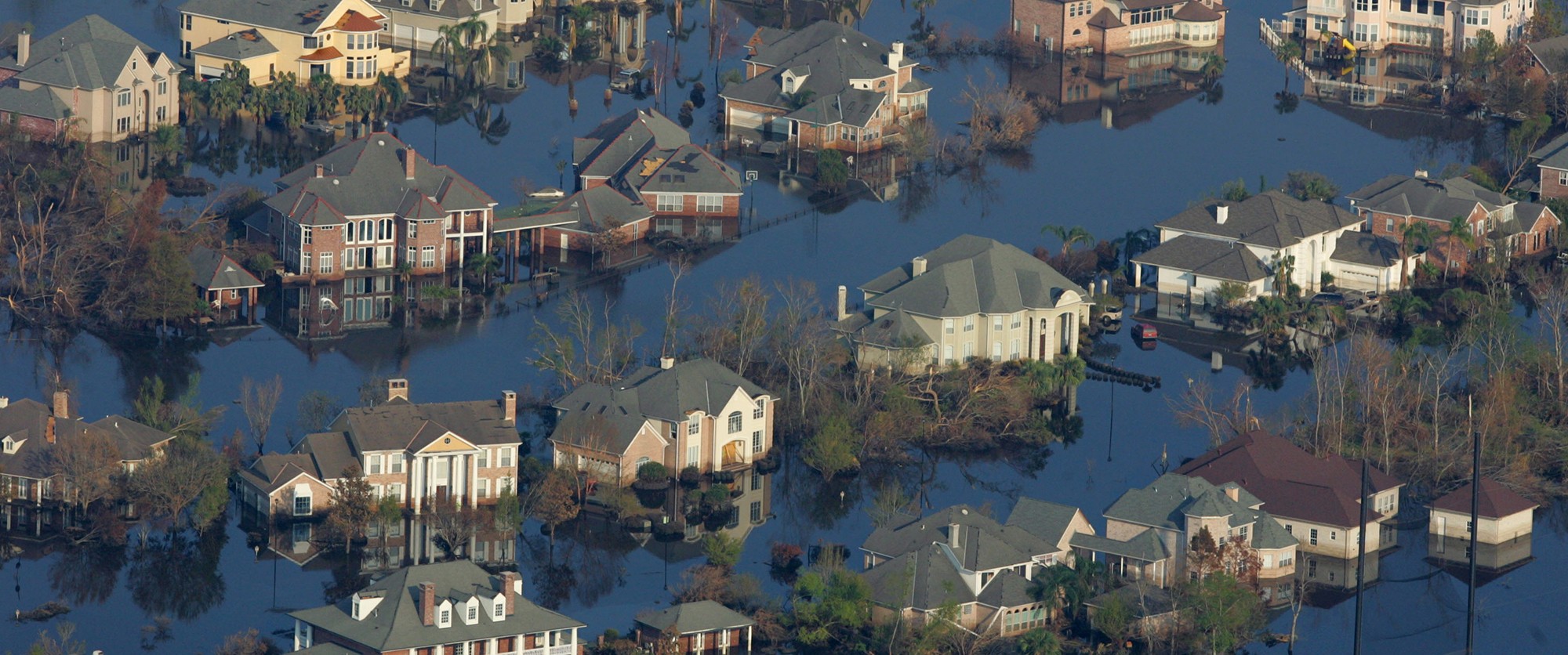
Sulzer Group Client Spotlight: Houma-Terrebonne Housing Authority (HTHA)
As of August 2025, multiple recovery and redevelopment projects under Disaster Recovery #4611 (Hurricane Ida) for our client, the Houma Terrebonne Housing Authority (HTHA) are actively underway or under review with FEMA.
One of the most significant efforts includes the replacement of 12 damaged buildings at Senator Circle. The revised replacement models for these buildings have been submitted and are currently under FEMA review. Once FEMA provides feedback and obligates funding, the projects will move on to the Governor’s Office of Homeland Security and Emergency Preparedness (GOHSEP) for final approval before obligation of funds.
In parallel, we are also moving forward with the redevelopment of an additional 21 buildings at Senator Circle. These buildings are further along in the process and will be the first phase of construction, followed by the twelve buildings currently at FEMA. The remaining Senator Circle buildings will be addressed in subsequent phases, as they are obligated by FEMA and GOHSEP.
While these funding reviews are in progress, our architectural and engineering (A&E) team is actively developing the scope of work and construction drawings for the Request for Proposal (RFP). We anticipate releasing the RFP Bid Package for construction services in September 2025, covering the phased redevelopment at Senator Circle.
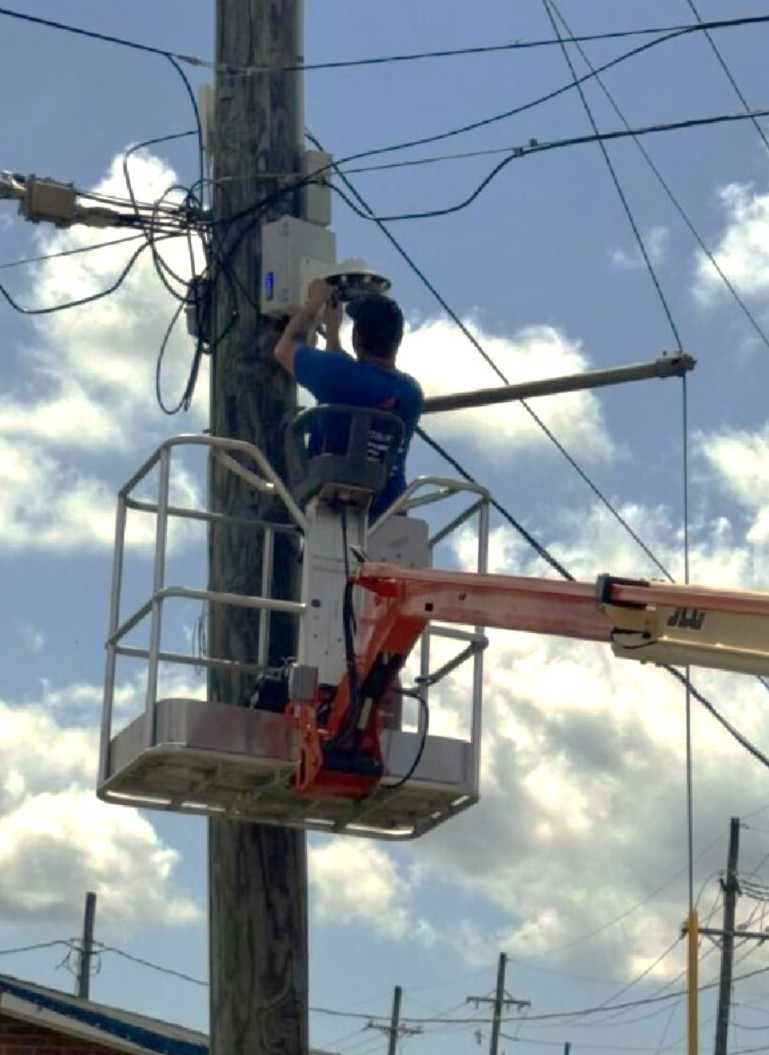
In addition to reconstruction efforts, HTHA is also enhancing public safety through the installation of new security cameras at Senator Circle. These state-of-the-art systems utilize technology similar to what the Houma Police Department employs and are designed to strengthen community safety and protection.
The Houma Terrebonne Housing Authority and the Sulzer Group remain committed to rebuilding stronger, safer, and more resilient communities. We thank you for your continued support and partnership throughout this recovery journey.
Why the Sulzer Group?
We’re a full-service, women-owned disaster recovery firm with over $2B in managed recovery funds. Our clients include secular and non-secular private non-profit organizations, municipalities, schools, and healthcare systems across all 10 FEMA regions.
When disaster strikes, the Sulzer Group is your first step toward response and recovery. Our team specializes in preparedness planning- ensuring that when disaster strikes, you’re ready.
📄 Need help organizing your preparedness plan? Call us today at 866.767.9869 or visit www.sulzergroup.com
Careers at the Sulzer Group
We’re growing — and we’re hiring! If you’re a proactive, detail-oriented professional who thrives in a fast-paced, mission-driven environment, we want to hear from you. We’re always looking for talented and qualified people to join our team. Reach out to us anytime at: HR@sulzergroup.com
Subscribe to The Sulzer Brief on LinkedIn to stay up to date with the latest news and events.